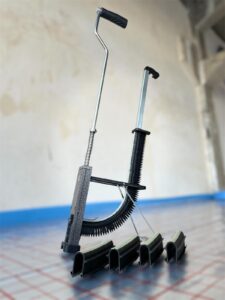

Preventing Structural Stress and Heat Loss: The Role of Expansion Tapes and Conduits in UFH

edge strip ufh heating

The Science of Slab Movement

An underfloor heating slab is not a static element. As hot water circulates through the circuit, the concrete or anhydrite mass undergoes continuous thermal expansion and contraction. Without adequate mechanical isolation and protection at transition points, this movement leads to cracked screeds, damaged perimeter walls, and sheared piping.

Perimeter Isolation: Preventing Thermal Bridges

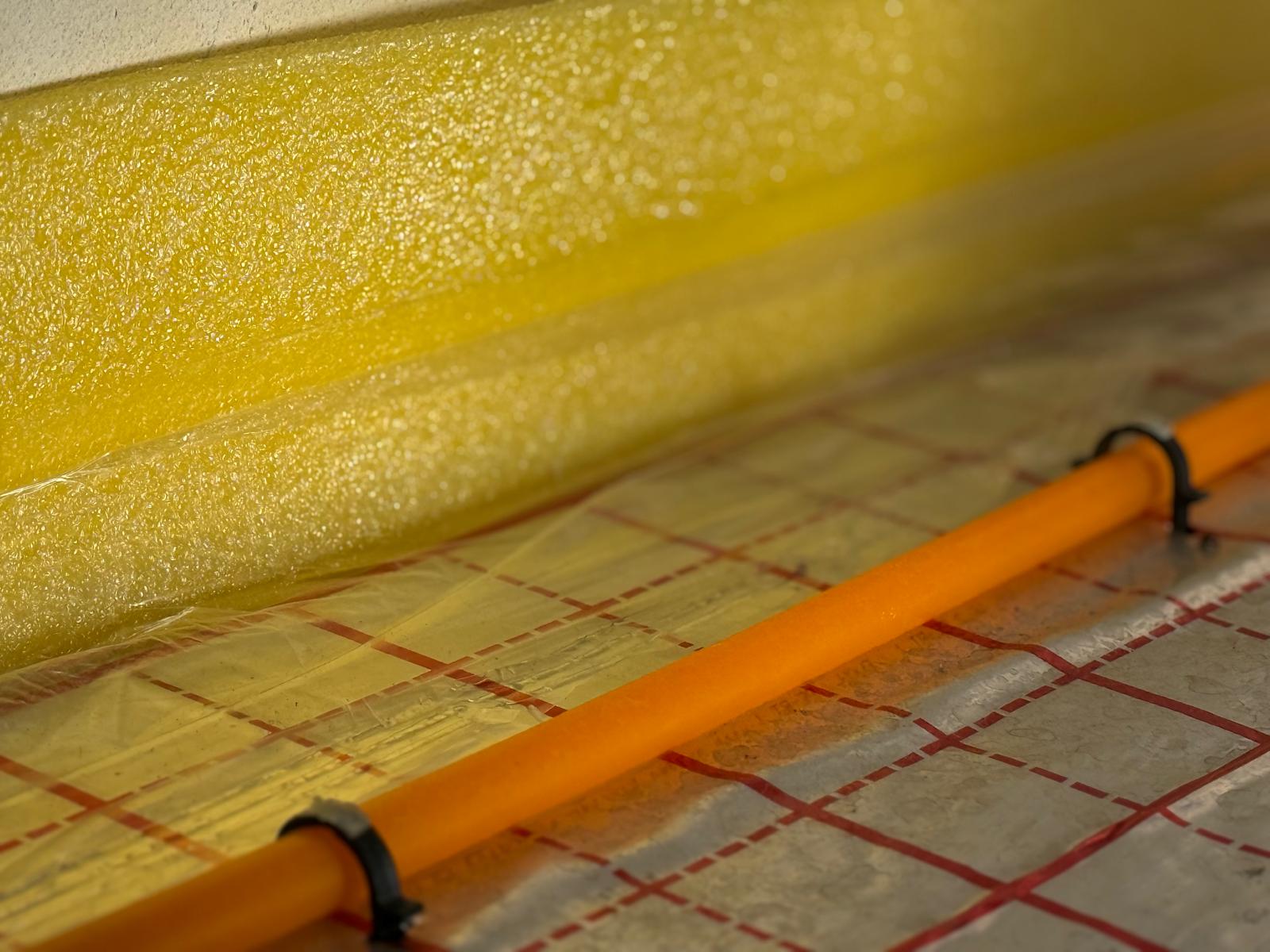
Perimeter isolation is the first line of defense. Installing high-density LDPE Perimeter Expansion Tapes between the screed edge and vertical walls creates a necessary compression buffer. Tapes equipped with self-adhesive backings and polyethylene foil skirts prevent the wet screed from seeping underneath the insulation boards—a common oversight on site that creates thermal and acoustic bridges.

Protecting Pipes Across Movement Joints

Equally critical is protecting the piping where stress concentrations are highest. Where pipes cross screed expansion joints or pass through partition walls, they must be sleeved in Corrugated Protective Conduit Sleeves. These flexible sleeves absorb differential movement of the slab sections and protect the pipe material against aggressive chemical reactions in wet screed formulations. For retrofitting over pre-laid pipe runs near distribution points, split Slit Conduits allow quick installation without disconnecting the circuit.

Safe Transitions: Connecting to the Manifold

Finally, the transition from the horizontal floor matrix to vertical runs leading into the manifold cabinet represents a high-risk point for pipe kinking. Utilizing rigid PA6-GF Pipe Guide Elbows at the floor entry guarantees a smooth bend radius, relieves tension on the pipe wall, and ensures a clean, professional alignment into the cabinet.

Share:

More Posts

Get in touch